Positive Psychology (PP) is the scientific study of how we can adapt to make life worth living. What are the characteristics, conditions and processes which lead to flourishing and being fulfilled? The research focuses on what goes right for individuals, communities and organisations and is as important to us as understanding what goes wrong.
It was in 1998 at the University of Pennsylvania in the USA where the founder of PP, Martin Seligman chose it as the subject for his inaugural speech as President of the American Psychological Association. But isn’t Happiness a slightly frivolous topic? Studying this area of psychology in a scientific way helps you to understand that happiness is not as straightforward as it might seem.
Two types of Happiness
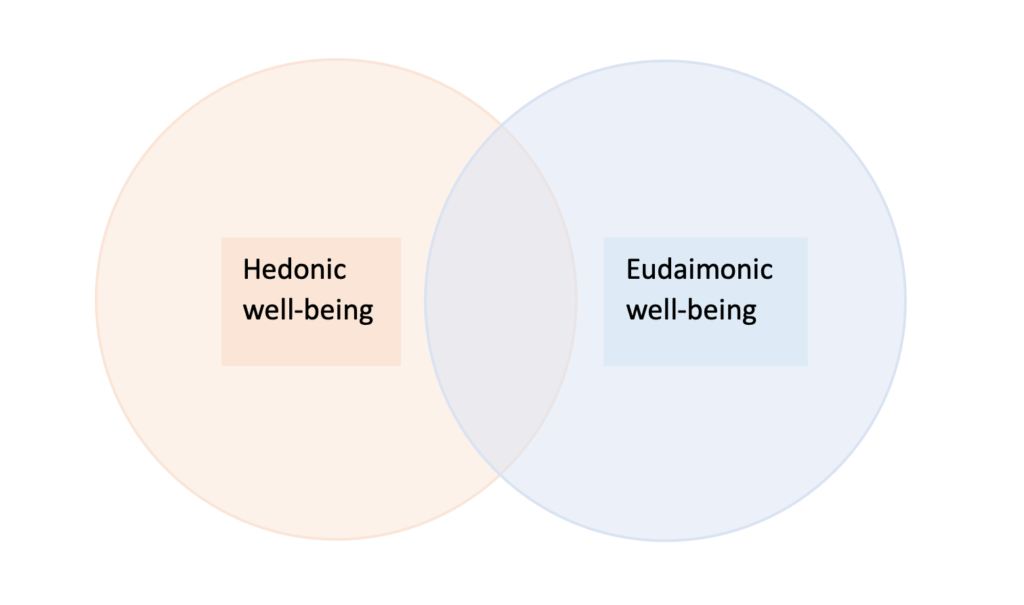
Hedonic happiness/well-being
Hedonic happiness or well-being comes from feeling pleasure in the moment. It’s typically short-lived, think of how you feel when you buy something nice for yourself. A new phone maybe or a new car or even a buying a bar of chocolate.

Hedonic happiness is that initial, immediate ‘whoosh’ of feeling pleasure, being happy and smiling. However, it soon fades. For as long as it takes to eat the chocolate or after a week of having a new car, you don’t have that same strong feeling of pleasure and happiness.
Hedonic well-being can have the negative effect of causing a ‘hedonic treadmill’ and can lead to addictive behaviour perhaps compulsive shopping and getting into debt because you are always searching for your next ‘hit’ of pleasure and happiness you feel once you’ve bought something new.
You’ve probably heard of a hedonist, a person who believes that the pursuit of pleasure, is the most important thing in life, a pleasure seeker. But can it lead to true and long-lasting, meaningful happiness?
Eudaimonic Happiness/Well-being
Compared to Hedonic happiness, Eudaimonic happiness is the serious side to happiness. Eudaimonic happiness is to find and develop long-lasting and fulfilling pleasure and happiness. Doing things which are worth doing and worthwhile.
Happiness gained from having meaning and purpose in our lives leading to our fulfilment and flourishing. Eudaimonic people constantly strive to meet their potential and best selves, leading to greater purpose and meaning.
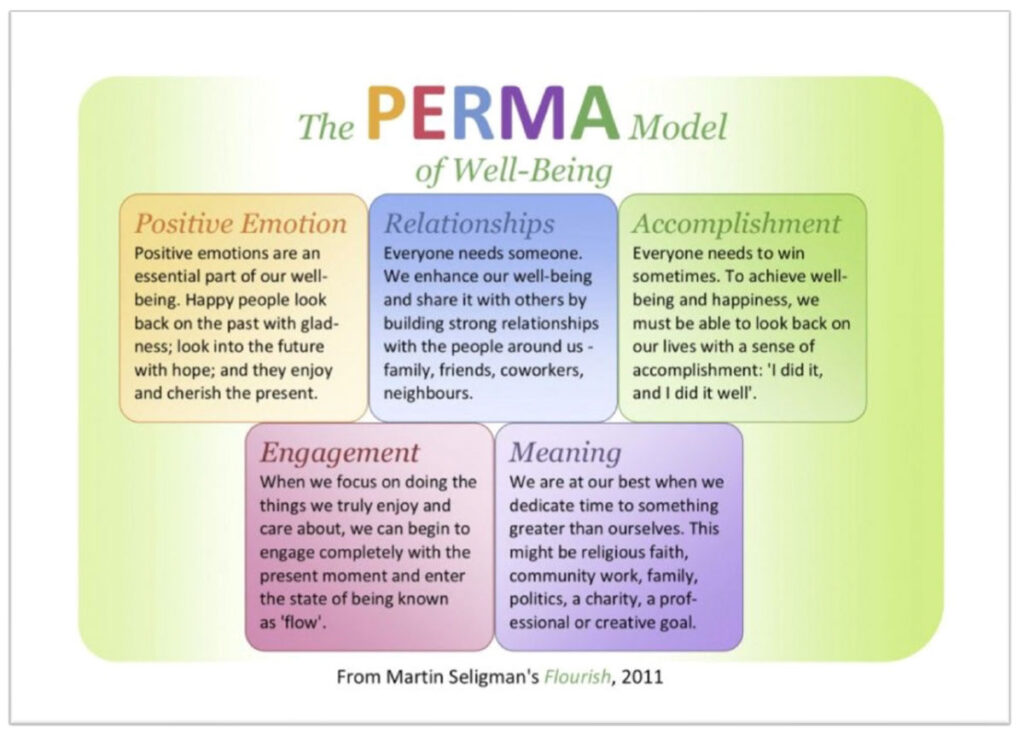
Martin Seligman’s PERMA model of Positive Psychology
PERMA is a model for the theory of well-being put forward by Martin Seligman. The PERMA model consists of five separate elements and brings aspects of both hedonic and eudaimonic well-being.
- Positive emotions – feeling good
- Engagement – being completely absorbed in activities
- Relationships – being authentically connected to others
- Meaning – purposeful existence
- Achievement – a sense of accomplishment and success
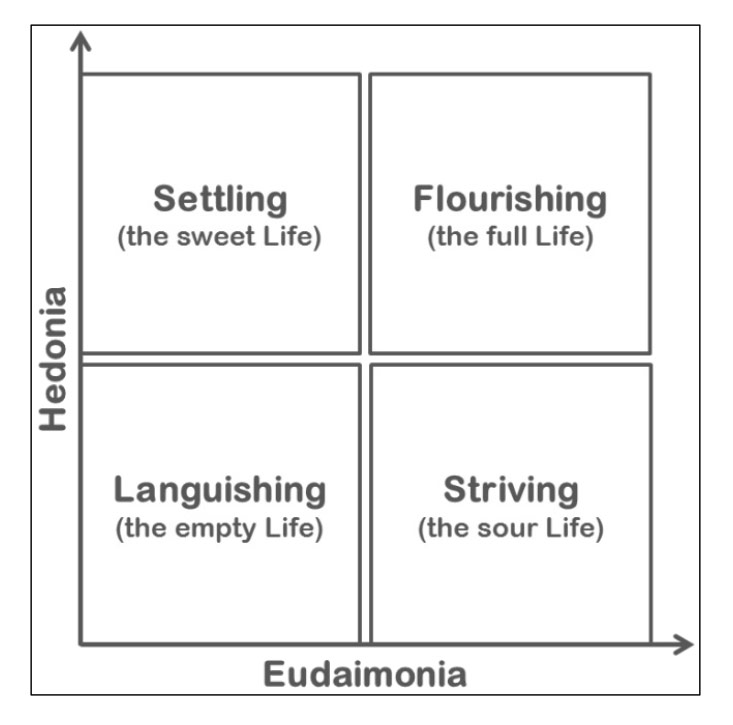
Positive Psychology helps us to look at ourselves and our lives and enables us to pursue authentic, fulfilling and long-lasting eudaimonic happiness and well-being, instead of the short-lived hedonic pleasure. It looks at the barriers to well-being, positive emotions, engagement and flow, meaning and purpose, character strengths, emotional intelligence, accomplishment, appreciate inquiry, positive mindsets, optimism, resilience, physical activity, motivation and goals.
It is much more than just feeling happy. We’re not expecting people to be cheerful all the time, life isn’t like that, things happen to make us sad, upset and angry. What PP interventions can do is to help people develop new habits, improve how they think and introduce activities which when engaged with, can make it easier to cope with the challenges we all face from time to time.
Develop a positive lifestyle, mindset or organisation. Contact us at hello@ebbandflow.org.uk for more information.